For grown-ups and older teens
Fluent in Woof and Meow.
Switching from a dog to a cat, or a cat to a dog, means unlearning half of what your last pet taught you. A wagging tail tells you a dog is aroused, happily or not; a swishing tail can tell you a cat is uncomfortable (AKC, International Cat Care). About one in four US pet owners lives with both a dog and a cat (Pew Research Center, 2023). Mixed Company is our grown-up corner for dog people getting a first cat, cat people getting a first dog, and every home keeping the peace between the two.
Written for grown-ups and older teens. For the family version, start at the map.
So you want to join Mixed Company?
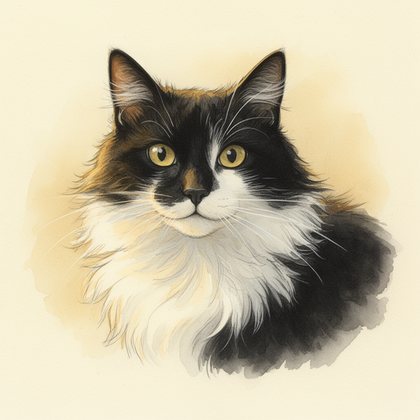
"Bienvenido, dog person, do come in. You're used to a hero's welcome at the door. Mine is more refined: a slow blink from the bookcase. Give me a quiet room and a box, and you'll be charmed. Everyone is."
What changes first: the cat comes to you, a shown belly is a compliment, and height matters more than floor space.

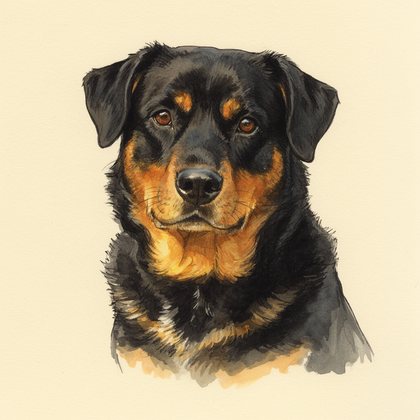
"Hi! You're a cat person! That means you're calm, patient and you don't take things personally. You'll need all three, mostly before breakfast. In return, every single time you come home, I'll act like it's the best thing that's ever happened. Because it is."
What changes first: a bathroom clock, walks that are mostly reading, and a face that watches yours.
"One of each? Good. Everybody eats in their own room, the cat takes the high road along the shelves, and the baby gate stays closed until everyone's calm. It isn't glamorous, but it's peace, and peace is where the fun starts."
What changes first: separate dining, a cat highway above dog height, and a litter box the dog can't reach.
Lost in Translation
A fast-moving tail
In a dog: arousal, which can be happy or not. Read the rest of the dog before you decide which. (AKC)
In a cat: a swishing tail can signal discomfort. Stop and give space. (International Cat Care)
What switchers get wrong: a dog person sees a busy tail, keeps petting, and finds out.
Belly up
In a dog: sometimes an invitation, sometimes appeasement or stress. Check the rest of the body. (AKC)
In a cat: usually relaxed, often a greeting. Not a request for a rub: the belly is one of the "red zones" most cats would rather you didn't touch. (Cats Protection, International Cat Care)
What switchers get wrong: treating every cat belly like a dog's.
Eyes
In a dog: soft eyes mean calm; a hard, fixed stare is a warning. Don't stare a dog down. (AKC)
In a cat: a slow blink is a friendly signal. In one study, cats blinked back and approached more after a person slow-blinked at them. (Humphrey and others, 2020)
What switchers get wrong: a cat person waits for a puppy to slow-blink; a dog person stares lovingly at a shy cat.
Running across the room
In a dog: when a cat runs, it can trigger the chase instinct automatically. (AKC)
In a cat: running is getting away. Cats feel safer when they can get up high or out of the room, so give every room an exit. (International Cat Care)
What switchers get wrong: "He just wants to play." The cat disagrees. Gate first, leash for introductions, reward the dog for looking at the cat and then back at you.
The "guilty look"
In a dog: a response to your tone and body language, not proof of guilt. Dogs looked just as "guilty" when scolded for something they hadn't done. (Horowitz, 2009)
In a cat: no courtroom either. Don't scold a cat or carry them to the litter box after an accident. A cat missing the box may be unwell, so the vet comes first. (ASPCA)
What switchers get wrong: scolding either one after the fact. Prevent, then reward the right thing.
Calling their name
In a dog: coming when called is a skill you practise daily and reward every time. Never scold a dog who comes back, or coming back gets less appealing. (AKC)
In a cat: cats can tell their own name from similar words. Responding is optional. (Saito and others, 2019)
What switchers get wrong: a dog person pats their knees and waits. A cat person never practises recall and wonders why the dog left.
The bathroom
In a dog: a clock. Out after waking, eating, drinking and play, and progress can take months for a puppy. (AKC)
In a cat: real estate. One tray per cat plus one extra, somewhere quiet, away from food and water. And out of the dog's reach, because dogs raid litter boxes. (International Cat Care, AKC)
What switchers get wrong: a cat person forgets the clock; a dog person puts the box in the laundry room, next to the dog bed.
Day one at home
In a dog: a small world and a set routine: same walks, same meal times, few new things at first. (Humane World for Animals)
In a cat: one small room with food, water, litter, a scratching post and somewhere to hide. Don't coax a hiding cat out. (International Cat Care)
What switchers get wrong: giving a new cat the whole house on day one, or a new dog a barbecue on day two.
Marking
In a dog: most grown-up boys lift a leg and many girls squat, but some girls lift and puppies squat. On a walk, both are reading and leaving messages. (AKC)
In a cat: spraying up a wall is mostly an unneutered cat's habit; neutering stops or cuts it in most boys. A neutered cat who starts spraying is often stressed or unwell, so see the vet first. (VCA)
What switchers get wrong: a cat person thinks a leg-lift on every lamp post is rude; a dog person thinks a spraying cat needs a telling-off. One is news, the other is a vet visit.
Field notes
Sources: Saito and others, 2019 (cats know their names); Humphrey and others, 2020 (slow blink); Best Friends Animal Society (gates and high places).
The household treaty
THE MIXED COMPANY HOUSEHOLD TREATY
Official terms of peace between [cat's name] and [dog's name]
Article I · Separate dining rooms. [Cat's name] eats up high or behind a gate. [Dog's name] eats in their own space. Nobody inspects anyone else's bowl.
Article II · The sky belongs to the cat. Every shared room has a high shelf, cat tree or bookcase route, so [cat's name] can cross without touching the floor.
Article III · The sanctuary. [Cat's name] has a dog-free room with water, a litter box and a hiding place, behind a gate [dog's name] can't pass.
Article IV · The litter box is not a buffet. It stays where [dog's name] can't reach it. No exceptions, no negotiations.
Article V · No chasing, ever. [Dog's name] earns treats for looking calmly at [cat's name] and then back at the humans. Nobody restrains [cat's name] or makes them say hello.
Article VI · The slowest paws set the clock. We watch the pets, not the calendar, and we never "let them sort it out".
For the feline delegation: ________ (slow blink)
For the canine delegation: ________ (loose wag)
Ratified by the humans, now fluent in Woof and Meow: ________ Date: ______
Sources for every article at talkingwithpets.com/mixed-company/. Typed names stay in your browser; nothing is sent.
Coming soon: the Mixed Company flip booklet. One side for dog people getting a cat, the other for cat people getting a dog, meeting in the middle at the household treaty.
Questions and answers
Every answer checked against its sources
What surprises dog people most about a first cat?
Often, expecting the cat to come when called and to want handling. Let the cat approach, stroke the cheeks and head rather than the belly, don't pick them up to say hello, and give them a quiet room with a hiding place and somewhere high. (International Cat Care, Cats Protection)
What changes most for a cat person with a first dog?
Usually the schedule. Bathroom trips after waking, eating, drinking and play; daily recall practice; time alone built up slowly; and walks that are mostly sniffing. (AKC, RSPCA, Humane World for Animals)
How do you keep the peace between a cat and a dog long term?
Separate feeding, a high route across every shared room, a dog-free room for the cat, a litter box the dog can't reach, and no chasing, ever. Go at the pace of the less comfortable animal. (International Cat Care, Best Friends Animal Society, AKC)
Should we get a boy dog or a girl dog?
Ask a breeder, a dog-walker or anyone at the dog park and you'll hear the classic version: boys are bigger, goofier and a bit slower to grow up; girls are calmer, mature sooner and are easier to train. Some of it shows up on average: in one large US survey, owners rated females a little more trainable and males a little less fearful (Dog Aging Project, 2025). But the differences are small, and the good guides are blunt that breed, energy level and the individual dog matter far more: "Breed and type are far more important when it comes to trainability than sex" (Purina).
What really differs:
- Size: boys are usually bigger within a breed.
- Toileting: most grown-up boys lift a leg, and many girls squat (AKC).
- Unspayed girls come into heat about every six months (PetMD).
- Both boys and girls mount, usually from excitement, play or stress (VCA).
- When to spay or neuter depends on your dog's size and breed, and neutering isn't a substitute for training, so ask your vet (AAHA).
Adding a second dog? You'll often hear that a boy and a girl get on best. The evidence for that is thin, so let a meeting decide: introduce the two dogs on neutral ground before you commit, and ask the rescue how this dog gets on with others.
Our advice: pick the breed type and energy that suit your life, then meet the dog. The right dog might be a boy or a girl, and you'll know which once you've met them.
Should we get a boy cat or a girl cat?
Most cat people have an opinion, and it's usually this: the boys are the big, friendly, cuddly ones, and the girls are more independent and choosy about their affection. Shelter staff hear it every day, and there's a kernel of truth. Best Friends' cat-behaviour expert says male cats "are often known to be more friendly, easygoing, and attention seeking", while females "can be more independent, cautious, and reserved". A survey of over 4,000 Finnish cats found the same lean, with females rated a little more shy (Mikkola and others, 2021). But she's quick to add: "Don't try to force a connection with a cat because of their color or sex" (Best Friends). Cats Protection says both can be equally affectionate (Cats Protection).
What really differs:
- Most of the famous differences belong to unneutered cats: boys spraying, roaming and fighting, and girls calling loudly when in season. Neutering stops or cuts most of it (VCA).
- Many cat welfare groups advise neutering by about four months (Cats Protection and the Cat Group).
- Boys are usually bigger.
- Boys carry one extra risk worth knowing: a urinary blockage. A cat straining in the litter box with little or nothing coming out needs a vet straight away (Cornell Feline Health Center); the full signs list is in our cat guides.
- Patches of orange and black almost always mean a girl, and most orange cats are boys (Stanford Medicine, 2025).
Two cats? Once both are neutered, sex matters little. Littermates, or two cats who already get on, are the easy win (Cats Protection).
Our advice: meet a few, sit quietly, and let the cat choose you. A kitten who was handled gently early on, or a grown cat whose history you know, tells you far more than boy or girl.
Sources: AKC (2, 3, 4, 5, 6) · International Cat Care (2, 3, 4) · Pew Research Center, 2023 · Cats Protection (2) · Humphrey and others, 2020 · Horowitz, 2009 · ASPCA · Saito and others, 2019 · Humane World for Animals · VCA (2) · Best Friends Animal Society · PetMD · AAHA · Dog Aging Project, 2025 · Purina · Cats Protection and the Cat Group · Cornell Feline Health Center · Stanford Medicine, 2025 · Mikkola and others, 2021 · Best Friends. Full list