How to read your cat: tail, ears and the slow blink
Type your pet's name on the map and every guide uses it.
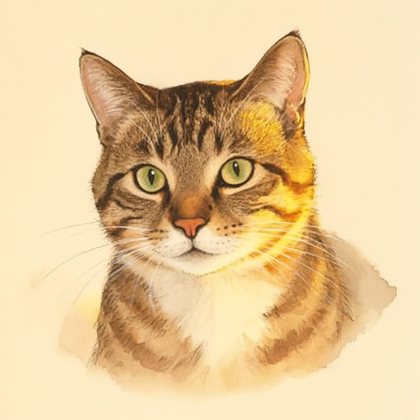
Read the whole cat, not one signal. A tail held straight up signals friendly intent, a slow blink often means relaxed and trusting, and cheek rubs leave the cat's scent behind. A thrashing tail, ears turning back, or skin rippling along the back mean stop now.
Most cats enjoy touch on the cheeks, chin and head; International Cat Care advises avoiding the legs, belly and base of the tail. Touch for about three seconds, then pause to see if the cat wants more.
The signals
- A tail held straight up, often with a curled tip
- A slow blink
- Rubbing cheeks on you or the furniture, leaving their scent
- A thrashing or thumping tail
- Ears turning back or flattening
- Skin rippling along the back
- A tucked tail usually means a frightened cat
- Big pupils can mean excitement, fear or aggression
- One signal alone can mean several things
What to do
- Let them come to you.Sit low, hands in your lap. A cat walking over with the tail up is saying hello.
- Touch where cats like it.Cheeks, chin and head: touch for about three seconds, then pause, and go on only if your pet leans in.
- Stop at the first "enough".A thrashing tail, ears turning back or rippling skin mean stop at once and give space.
- Read signals together.One signal can mean different things. Big pupils, for instance, can mean excitement or fear. Look at the ears, tail and body as well.
- Let a slow blink be a slow blink.In one small study, cats half-closed their eyes more after their person blinked slowly at them. Look a little past the cat rather than staring.
Your job
With a grown-up, sit low across the room, hands in your lap, and read your book out loud, softly. Let your pet come to you.
Watch for the question-mark tail: that is a cat saying hello.
Did you know?When a cat walks toward you with its tail straight up, it is saying a friendly hello. The tip of the tail may curl a little.
A grown-up stays within arm's reach whenever children and your pet are together, and children let your pet come to them. No picking up; a lap is by invitation. If a grown-up must lift your pet: two hands, the whole body supported, a few seconds, never by the scruff.
One thing we never repeat
Sources: International Cat Care (2, 3, 4) · VCA Animal Hospitals (2) · Bideawee · Scientific Reports · Cornell Feline Health Center. Full list